News Release
10Month
2026
1,021 Tonnes of Green Methanol! CIMC Enric Facilitates China’s First Green Methanol Bunkering Operation for an International Voyage Bulk Carrier
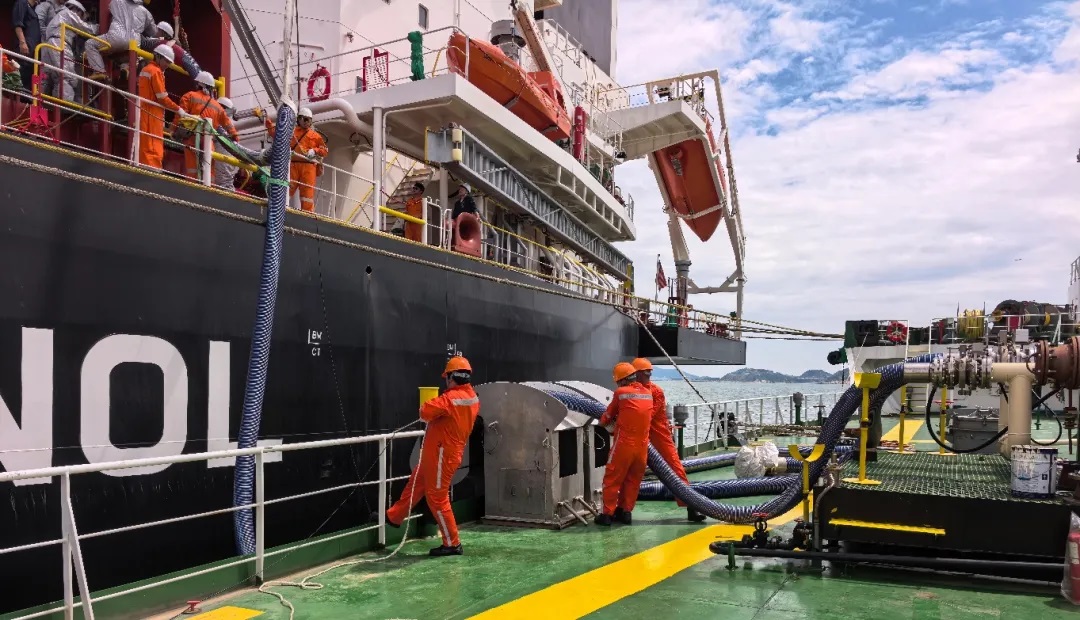
On September 6, at Guangzhou anchorage, Sinopec China Shipping’s Daqing 268 successfully completed the ship-to-ship (STS) bunkering operation for the world’s first methanol dual-fuel Ultramax bulk carrier. The 1,021 tonnes of pure bio-methanol for the bunkering operation was supplied by CIMC Enric. This marked China’s first green methanol bunkering operation for an international voyage bulk carrier and also the first methanol STS bunkering operation at Guangzhou Port, representing a breakthrough in green methanol supply capability.
The successful operation in Guangzhou, following previous green methanol bunkering operations in Shenzhen and Hong Kong, means that Guangdong-produced bio-based methanol has established a supply network across the Guangdong-Hong Kong-Macao Greater Bay Area. The regional integrated green methanol supply chain, covering production, storage, transportation and bunkering, is evolving from individual pilot project toward coordinated operations across the region, supporting the low-carbon transition of shipping in the Greater Bay Area.
The development connects the production, storage, transportation and bunkering segments of the green methanol supply chain, moving the region beyond individual pilot projects towards coordinated operations across the Greater Bay Area.
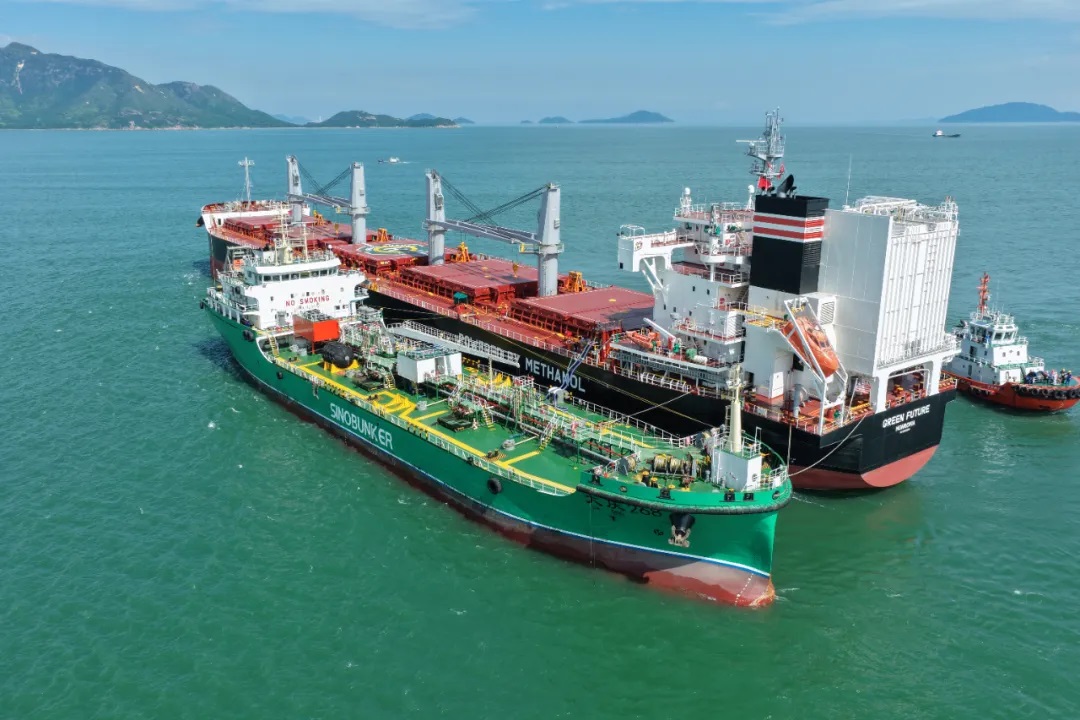
As the core supply base for this operation, CIMC Enric’s Zhanjiang green methanol facility is China’s first commercial-scale bio-methanol production plant. Its Phase I project has an annual capacity of 50,000 tonnes. Since beginning production, the facility has maintained stable production and delivery, supplying bio-based methanol for green methanol bunkering operations to major ports across China.
Its products have a life-cycle greenhouse gas emission reduction rate of more than 85% and have obtained ISCC EU sustainability certification, with their specifications meeting the international requirements for shipping decarbonization, and can support the low-carbon operation of vessels worldwide and offer a reliable clean energy option for the shipping industry’s low-carbon transition.